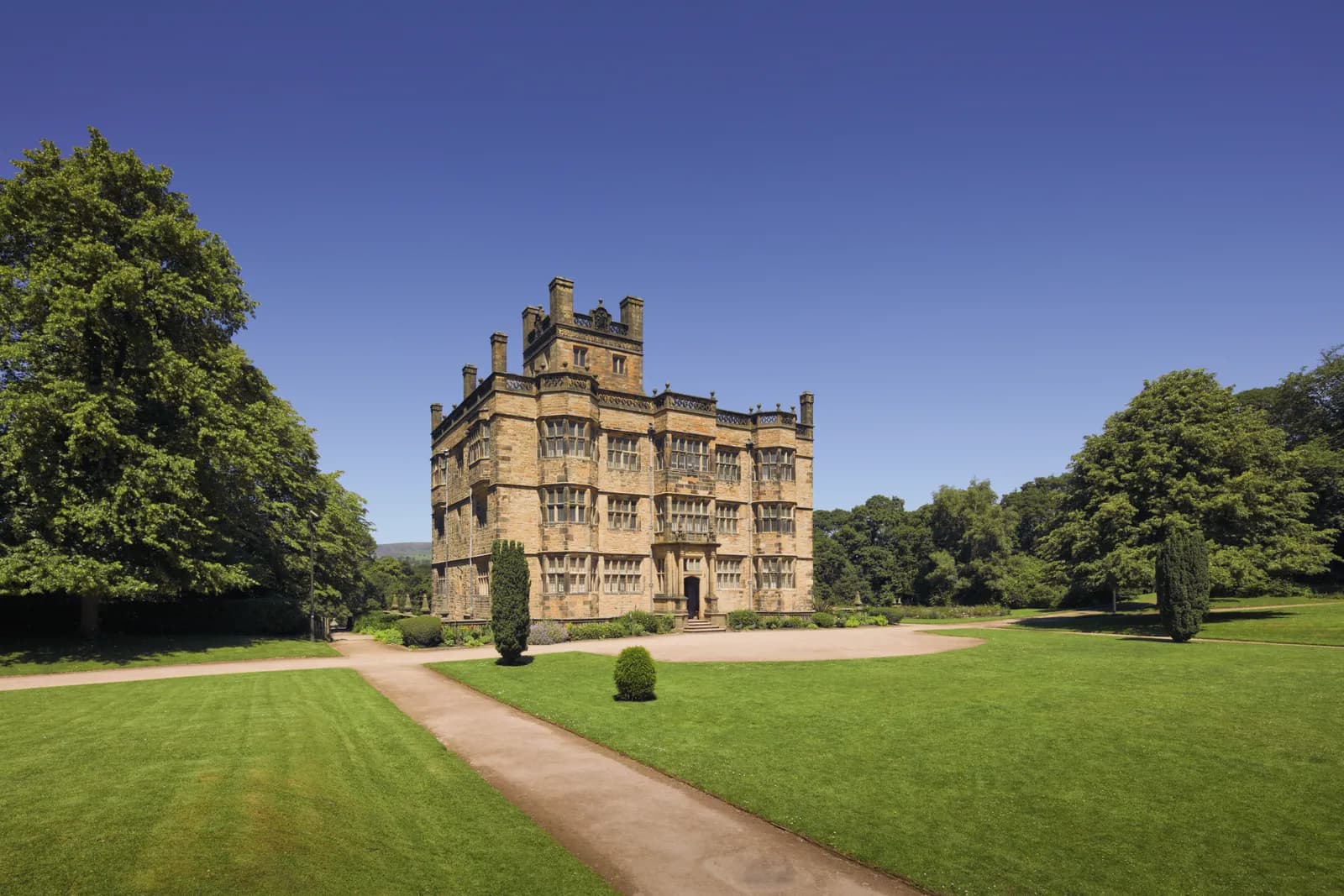
Rachel Beatrice Kay-Shuttleworth MBE devoted her life to preserving the textile traditions of Lancashire. Through her remarkable collection and educational vision, she transformed Gawthorpe Hall into a living resource for the Burnley community.
A Life Devoted to Craft and Community
Born on 17 February 1886, Rachel was the daughter of Ughtred Kay-Shuttleworth, 1st Baron Shuttleworth, and Blanche Marion Parish. The Shuttleworth family had occupied lands in Lancashire since medieval times, with tradition holding that they made their fortune from wool weaving. This deep-rooted connection to textile production would shape Rachel's life purpose.
Never marrying, Rachel dedicated herself to collecting, teaching, and preserving textile crafts. She began her collection around 1912, initially gathering pieces to use as teaching aids. What started as practical educational materials grew into one of the most significant textile collections in Britain.
From Private Home to Public "Craft House"
Gawthorpe Hall, the Elizabethan country house on the banks of the River Calder in Ightenhill, became Rachel's home in 1953. Rather than keeping the estate as a private residence, she opened it to the community as a "Craft House" where people could learn practical textile skills.
Rachel was influenced by the Arts and Crafts Movement, which believed that creative practice could drive social and economic development. She taught embroidery, lace-making, and other textile arts to local residents, insisting that craft skills should be accessible to working-class communities, not reserved for the privileged few.
The Collection That Grew to Thousands
During Rachel's lifetime, the collection expanded to approximately 11,000 items. Today it numbers around 30,000 pieces, including lace, embroidery, woven and printed materials, costume, accessories, books, and tools from across the world spanning five centuries.
What distinguished Rachel's approach was her belief that textiles should be "held, touched, and used for educational purposes" rather than locked behind glass. She personally attached hand-written labels to many pieces, often in her distinctive green ink. Some of the most significant items in the collection were made by Rachel herself.
Beyond Textiles: Public Service and Girlguiding
Rachel's commitment to her community extended beyond craft education. She was appointed Justice of the Peace in 1934 and received an MBE in 1949 "For public services in Lancashire."
In 1916, she became the first County Commissioner for Girlguiding in Lancashire, holding the position for more than 30 years and earning the Silver Fish, the movement's highest award. A Girlguiding gate at Gawthorpe Hall commemorates her decades of service to young women in the region.
Legacy in Burnley Today
Rachel died on 20 April 1967 at Gawthorpe Hall, aged 81. Three years later, her nephew gave the hall to the National Trust, with Lancashire County Council taking a 99-year lease to manage the property.
The Rachel Kay-Shuttleworth Collections now operates as a registered charity under the name Gawthorpe Textiles Collection. In 2014, the organisation won the Sandford Award for heritage education excellence. The collection remains internationally recognised and continues to inspire contemporary designers, with companies producing ranges inspired by its holdings.
In 2023, the collection moved from Gawthorpe Hall to Northlight House in Brierfield, ensuring Rachel's vision of accessible textile education continues for future generations of Burnley residents.